
CALL US TODAY
(807) 223-6479
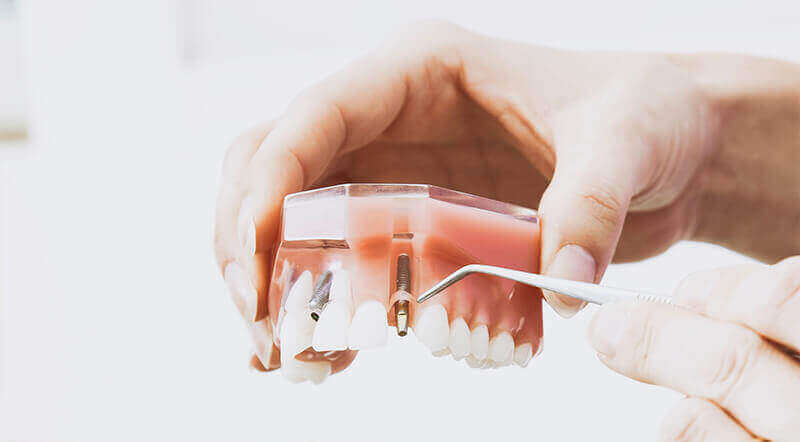
A dental implant is a restorative option used to replace the root of a missing tooth. Implants can be used to support crowns, bridges, or dentures.
The implant itself is typically made of titanium and shaped like a small screw. It is placed into the jawbone, where it integrates with the surrounding bone tissue through a process called osseointegration. After a healing period, an abutment (a connector piece) is attached to the implant to support a dental restorations such as a crown, bridge, or denture.
Replacing missing teeth can help maintain the alignment of your remaining teeth. When a space is left unfilled, adjacent teeth may shift, and opposing teeth can over-erupt into the space, which can alter your bite and affect oral function.
Not all patients are suitable candidates for dental implants. Your dentist will assess your oral and general health to determine whether implants are appropriate for you.
Some factors that influence implant eligibility include:
Bone density: There must be sufficient bone volume to support the implant. If the bone is insufficient, a grafting procedure may be recommended before implant placement.
Oral health: Teeth and gums should be healthy and free from active decay or periodontal (gum) disease.
General health: Because implant placement is a surgical procedure, your overall health must support proper healing.
Implants require the same daily care as natural teeth, including brushing, flossing, and regular dental checkups.
A typical root-form dental implant consists of three main parts:
Implant screw: The titanium component placed within the jawbone. It serves as an artificial root.
Abutment: The connector that attaches to the implant screw and supports the restoration.
Crown, bridge, or denture: The visible restoration that replaces the missing tooth or teeth.
Dental implants are one option for tooth replacement and may offer several functional and aesthetic advantages, including:
Helping to restore the appearance and function of natural teeth
Providing stable support for crowns, bridges, or dentures
Allowing normal chewing and speaking function
Helping to preserve surrounding teeth by not relying on them for support
As with all dental treatments, individual results vary. The longevity of dental implants depends on factors such as oral hygiene, overall health, and regular professional care.
What happens if a missing tooth is not replaced?
Missing teeth can lead to changes in the alignment of nearby teeth and gradual bone loss in the affected area.
Who is a good candidate for implants?
Most healthy adults may be candidates, but your dentist will determine suitability based on a clinical and radiographic examination.
Is implant placement painful?
Implant placement is typically performed under local anesthesia. Your dentist will discuss pain management and aftercare instructions with you.
How long is the recovery period?
Healing times vary by patient and depend on the extent of treatment. Many people can return to normal activities within a short period after surgery.
How do implants compare with other treatment options?
Your dentist can discuss the advantages and limitations of implants compared to other tooth replacement options, such as bridges or removable dentures.
If you would like to learn more about dental implants and whether they are appropriate for you, please contact Sunset Country Dental at (807) 223-6479 to schedule a consultation with one of our dentists.
| Monday | 8.00 am - 5.00 pm |
| Tuesday | 8.00 am - 5.00 pm |
| Wednesday | 8.00 am - 5.00 pm |
| Thursday | 8.00 pm - 5.00 pm |
| Friday | 8.00 am - 1.00 pm |
| Saturday | Closed |
| Sunday | Closed |
